
Additional opportunities for supporting youth initiatives identified
A dialogue between President Mirziyoyev and youth was held at the Kuksaroy residence with over 60,000 participants. Additional $200 million for youth entrepreneurship, new credit programs, business incubators, and volunteer support measures were announced.
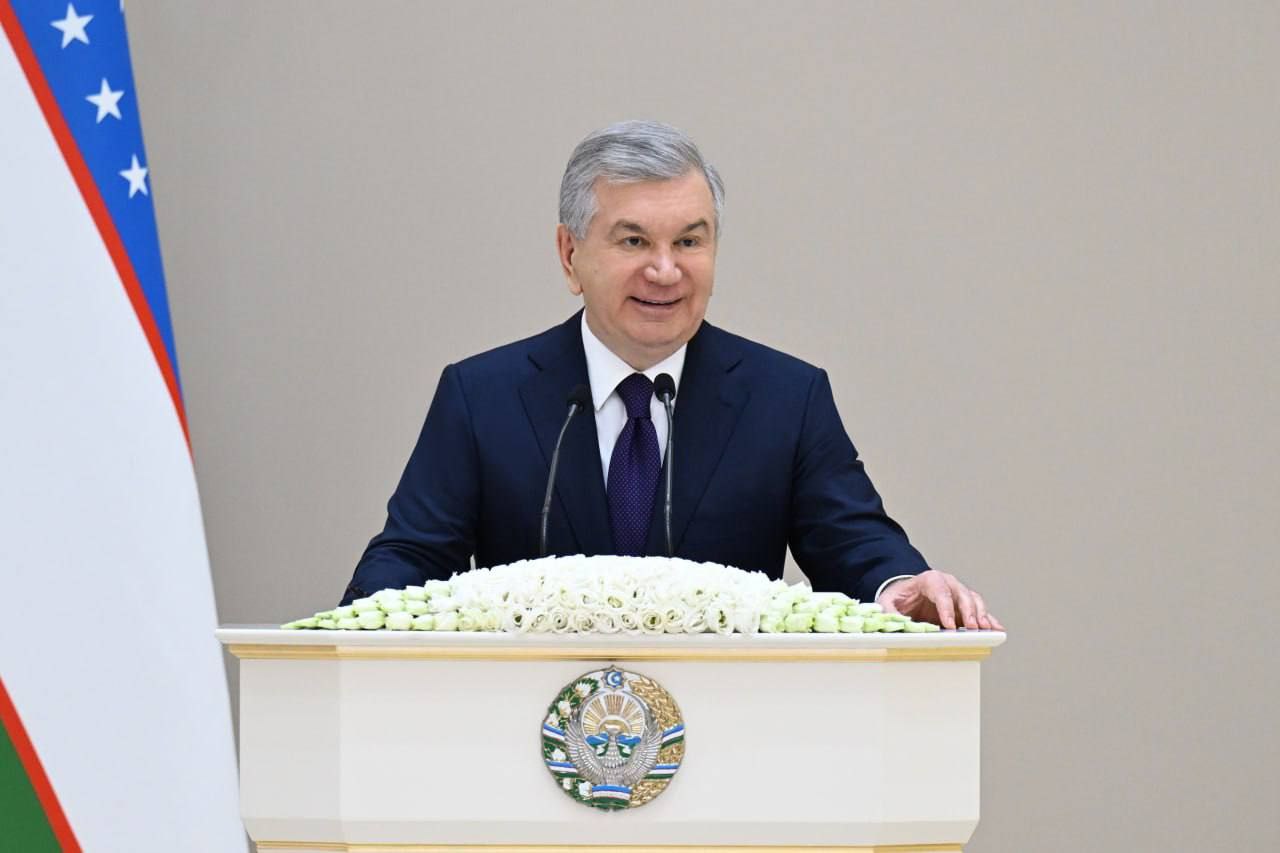
A dialogue between President Shavkat Mirziyoyev and youth was held at the Kuksaroy residence.
More than 60,000 youth representatives participated in the meeting through studios in Karakalpakstan, regions, and the city of Tashkent.
Warmly greeting the audience, the head of state noted that more than 22 million young people in our country represent an enormous economic, social and political force. It was emphasized that leaders at all levels must actively work on teaching youth languages and professions, involving them in sports, supporting their ideas, projects and startups, and creating conditions for them to have jobs and decent income, leaving no one without attention and support.
Thanks to opportunities created in recent years, our youth have won 66 gold, 147 silver and 221 bronze medals at international academic olympiads. The number of students studying at prestigious universities such as Harvard, Yale, Princeton, Columbia and Cornell exceeded 500, and the number of our young people admitted to the top 100 world universities reached over 3,500. 63 startup projects created by young compatriots have already entered the markets of the USA, South Korea, the UK and the UAE. Our athletes have won 720 gold, 671 silver and 854 bronze medals in international arenas. Today, 35 percent of our country's business representatives are young entrepreneurs.
In this context, recognition of Uzbekistan as one of the most dynamically developing countries in the Global Youth Development Index is logical. The upcoming opening of the World Youth Peace Movement headquarters in Tashkent this year, and holding in Samarkand the 12th Global Conference of Youth Parliament Members, the international startup summit "Take Off" and the 46th World Chess Olympiad will further strengthen this status.
Noting that 600,000 young people enter the labor market annually, and by 2030 this figure will reach 1 million, the President indicated that creating conditions for youth to find work matching their interests and abilities is a task of paramount importance.
According to survey results among youth, one-third expressed a desire to become entrepreneurs.
It was noted that last year banks and the Youth Affairs Agency were allocated $400 million for youth employment, and through the "Yoshlar biznesi" and "Kelajakka qadam" programs, 15,000 young people started their own business, employing 50,000 people.
Continuing this work, an allocation of an additional $200 million for supporting youth entrepreneurship was announced.
Financing options will be expanded: the credit amount for young self-employed will increase from 100 million to 300 million soums. Young entrepreneur projects can receive up to 10 billion soums in credit. Investment in innovative startups of up to $100,000 will be permitted. Convenient financing packages will be introduced for young people interested in opening franchised branches of local brands that have created more than 1,000 jobs in services and public catering.
Starting this year, the "Kelajak tadbirkori" program is being launched, providing young entrepreneurs with credit for up to 7 years at 15 percent per annum.
In particular, collateral-free credits will be provided: up to 20 million soums for self-employed youth, up to 300 million soums for youth starting their own business, up to 2 billion soums for those planning to expand their activities, and up to 10 billion soums for entrepreneurs who have employed at least five graduates.
It was also noted that 30 percent of youth starting entrepreneurial activities face difficulties due to lack of business skills. In this regard, youth business incubators will be created in each region, providing comprehensive services in entrepreneurship training, turning ideas into businesses, accounting and banking support, marketing, and entering domestic and foreign markets.
Noting the readiness of several prestigious foreign universities to cooperate in youth entrepreneurship training based on advanced international experience, a decision was made to launch the "Yangi avlod tadbirkorlari" program, which plans to train at least 40,000 young people in business skills. The best 1,000 participants who successfully complete the program will receive a 7-percent loan of up to 200 million soums for 3 years for their projects.
An annual "Young Entrepreneurs" competition will be held, with up to 1 billion soums from the Yoshlar Ventures fund allocated for forming and elevating the 100 best projects to brand status.
From March 1, expenses of young beginning entrepreneurs on government services related to infrastructure connections will be covered by the state youth entrepreneurship development fund.
The task was set to expand the experience of the inclusive camp for social initiatives "Voice Up" — to hold similar events in each region covering 1,000 young participants, and organize an International Inclusive Youth Camp in Samarkand featuring the best initiatives.
Under the "Upshift" project, competitions this year will also be held in media, design, crafts, manufacturing and innovation. 2 billion soums will be allocated for financing the 40 best startups.
Tasks were defined for updating educational programs in technical colleges considering employer requirements, expanding dual education coverage, and improving the material and technical base.
Technical colleges, like universities, will be permitted to open spin-offs, with up to 1 billion soums allocated for student startup projects. Starting this year, technical college students will also be able to work abroad for six months to earn additional income under the "Work and Travel" program, with loans provided for travel expenses.
It was noted that the mechanism for supporting youth with foreign language certificates demonstrates effectiveness: the number of young people who obtained such certificates exceeded 600,000, a corps of 72,000 instructors fluent in foreign languages was formed. The number of private training centers tripled to over 38,000.
An initiative to create an Association of Private Training Centers was supported. Entrepreneurs renting premises to association member centers will be exempt from rental income tax and profit tax. Practice of sending teachers from such centers for internships at leading educational institutions will also be introduced.
Under the "Ko'mak" program, interest-free loans of up to 300 million soums are envisioned for expanding foreign language teaching centers in remote and hard-to-reach regions. Training centers in remote areas will pay 1 percent social tax, and the income tax for teachers will be 7.5 percent (instead of the current 12 percent).
Additional benefits were defined for training centers that provide free education to youth from needy families: they are exempt from land and property taxes, 50 percent of utility costs will be compensated, and paid income and social taxes for teachers will be returned as cashback.
Special attention was given to developing volunteer activities. It was noted that thanks to the established legal framework, the number of volunteers in the country increased fivefold to over 100,000, engaged in ecology, medicine, education, and emergency assistance.
To further develop the volunteer movement, a Board of Trustees will be created, and a Volunteer Support Fund under the Youth Affairs Agency. The fund will receive 20 billion soums annually from the state budget and an additional 3 billion soums from local budgets. These funds will provide grants of up to 100 million soums for volunteer projects, and a points system through a "social activity card" will be introduced.
Issues of supporting young families and promoting reading were also discussed at the meeting.
It was noted that under the mortgage program for young families, the portion of the credit interest rate exceeding 14 percent will be compensated from the budget.
Through the Reading Culture Development Fund, creative commissions will be placed with the most talented writers with payments of 20 million soums per month for one year, and 50 percent of translation and publishing costs of the best foreign literature in Uzbek and national literature in foreign languages will be compensated.
The task was set to prepare a collection of 100 best works before the new academic year and provide them to all schools and technical colleges, and to reward the most active student readers with a prize of 10 million soums.
For entrepreneurs opening libraries, book cafes and stores selling 10,000 books per month, a preferential loan of up to 1 billion soums for 3 years at 7 percent per annum is envisioned.
The launch of the "Second Chance" project was announced, aimed at accelerated social adaptation of youth returning from correctional institutions. Under the project, 8-12 month intensive courses in programming, web design, computer engineering, other professions and foreign languages will be organized to facilitate employment and stable income.
In conclusion, the head of state communicated with youth, listened to their proposals and initiatives in various areas. Reports from responsible officials were also heard during the event.
Related news
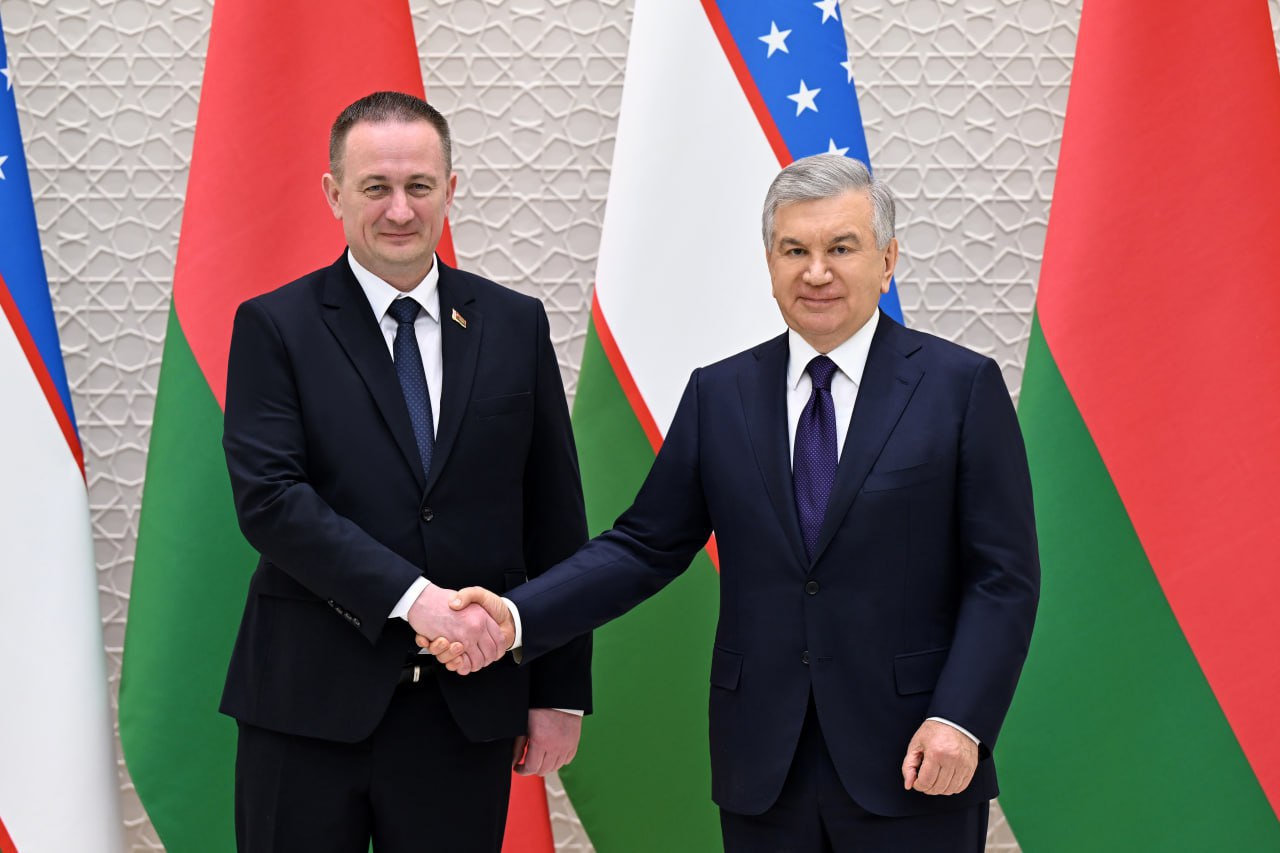
President of Uzbekistan received Prime Minister of Belarus
President Mirziyoyev received Prime Minister of Belarus Alexander Turchin on February 24. Trade turnover grew by 25 percent reaching nearly $1 billion. Importance of joint projects in multiple sectors was emphasized.
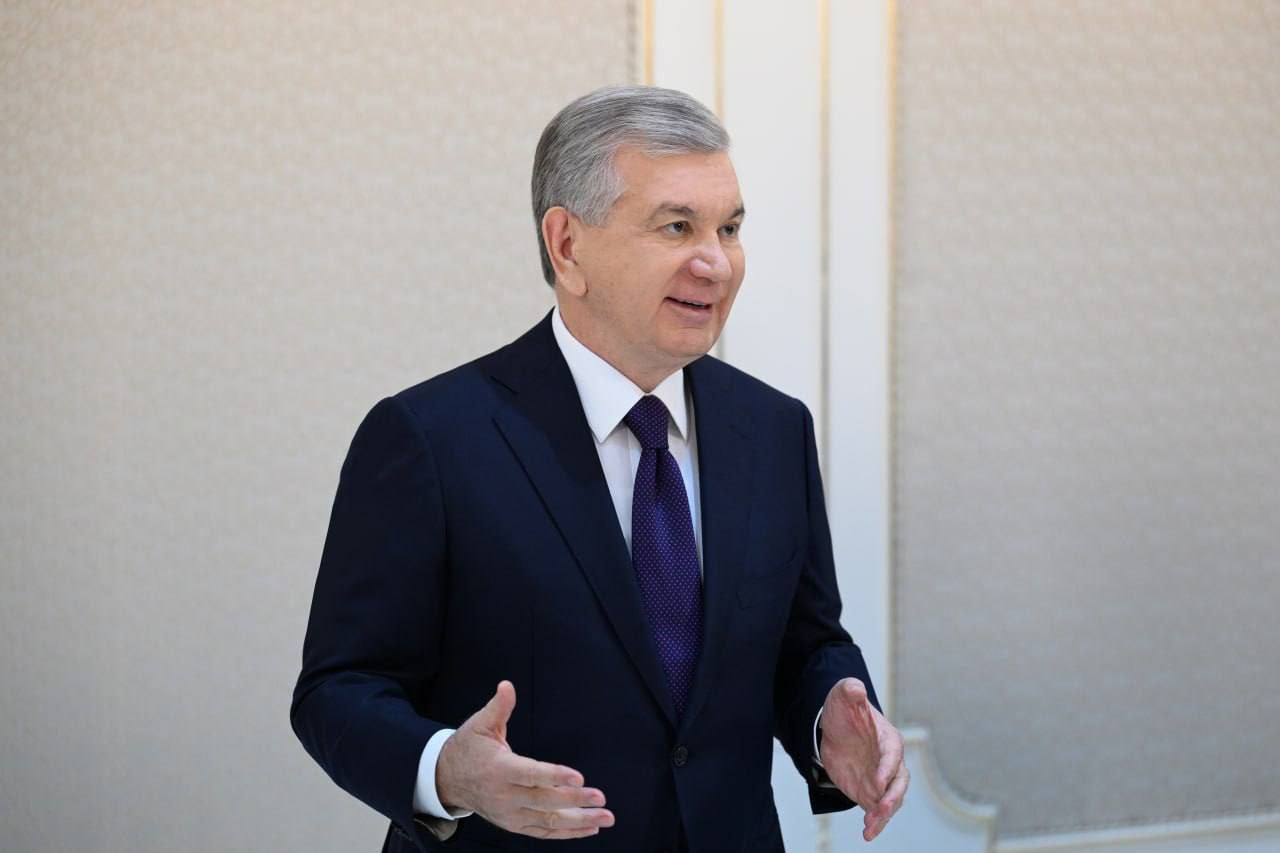
President reviewed projects that won the 'President Tech Award' competition
President Mirziyoyev reviewed presentations of President Tech Award winners. The competition selects outstanding projects in AI, fintech, gaming and other areas. Participants grew from 4,000 to 6,000, teams from 444 to 862.
Meeting with ambassadors of Oman, Qatar and Jordan
On February 23-24, First Deputy Minister of Foreign Affairs of Uzbekistan Bakhromjon Aloev held separate meetings with ambassadors of Oman, Qatar and Jordan. Current issues of cooperation were discussed with special attention to trade, economic and investment interaction.