
International Day of Parliamentarism: meaning, challenges and prospects in the global democratic agenda
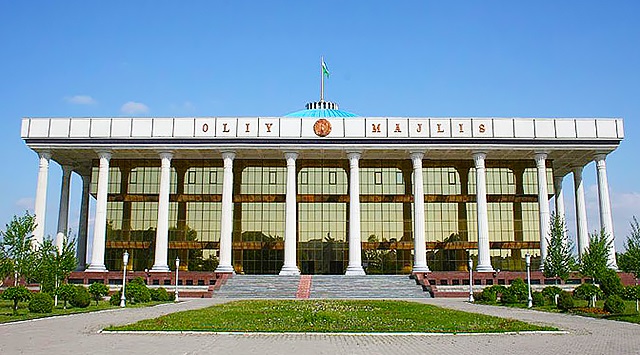
Parliamentarism in the face of global challenges
Parliaments play a key role in the system of democratic governance, ensuring representation of the interests of citizens, exercising control over the executive branch and implementing legislative functions. In the context of increasingglobal polarization, decreasing trust in public institutions, as well as growing pressure on freedom of expression and parliamentary independence, the issue ofrethinking and strengthening the role of parliamentsbecomes especially relevant.
In this context, the International Day of Parliamentarism, celebrated annually on 30 June, takes on not onlysymbolicbut alsopracticalmeaning . It emphasizes the role of parliaments as key pillars of democratic transformation and at the same time serves as a global platform for discussing current challenges, promoting institutional reforms and developing innovative models of representation that correspond to the political and social realities of the 21st century.
Modern parliaments go beyond domestic regulatory institutions and become activeparticipants in the global politicalco-legal architectureinvolved in addressing transnational challenges such as climate change, digital transformation, migration crises, public health and human rights. In this context, parliamentary diplomacy, transparency and inclusiveness take on a new dimension.
As emphasized in official UN materials, “strong parliaments are the foundation of democracy”, since they “reflect the views of the people, make laws and hold governments accountable.” It is no coincidence that UN Secretary-GeneralAntónio Guterresin his message on the occasion of the International Day of Parliamentarism on June 30, 2018, noted that“Parliaments can be pillars of democracy, important defenders of human rights and a link between local and global issues. Through legislative and budgetary decisions, they can significantly contribute to the achievement of the Sustainable Development Goals.”
In April 2025, the capital of Uzbekistan hosted for the first time the 150th anniversary Assembly of the Inter-Parliamentary Union - an event of historic proportions for Central Asia. The forum, held under the theme “Parliamentary action for social development and justice”, brought together about 1,400 delegates from approximately 130 countries, including over 100 speakers and deputy speakers of national parliaments
Opening the Assembly, President of Uzbekistan Shavkat Mirziyoyev emphasized the significance of the event and the scope of participation: “You are like a strong bridge connecting peoples of strong friendship. You are a powerful force capable of taking the concerns and problems of ordinary people, raising them, if necessary, to the regional and international level and finding effective solutions to them.” The Head of State noted that participation in the Inter-Parliamentary Union reflects confidence in efforts in the field of democratic reforms and expansion of parliamentary powers, and also expressed confidence in the role of parliaments as a key mechanism for peacemaking, social development and justice.
Establishment of the International Day of Parliamentarism
The date of celebration - 30 June - is symbolic: it was on this day in 1889 that the Inter-Parliamentary Union was created, marking the beginning of organized international cooperation between legislative bodies and the formation of modern parliamentary diplomacy.
The establishment of the International Day of Parliamentarism goes back to the UN General Assembly Resolution A/RES/72/278 of May 22, 2018, adopted at the initiative of the Inter-Parliamentary Union in connection with the 130th anniversary of its founding. Founded by two pacifists - the British William Cramer and the French Frédéric Passy - the Inter-Parliamentary Union was originally conceived as a platform for peaceful arbitration and dialogue. Over time, it has transformed into a unique global platform for parliamentary diplomacy and inclusiveness. In the context of the Cold War and the post-colonial world, the Inter-Parliamentary Union remained neutral and became a rare space for dialogue between opposing blocs, and later - a link between parliaments and UN structures.
Today, the Inter-Parliamentary Union unites 181 national and 15 regional parliaments and acts as the central institution in the field parliamentary diplomacy, promoting gender equality, protecting human rights and promotingsustainable development. According to the Secretary General of the Inter-Parliamentary UnionMartin Chungong, “Modern parliaments must evolve significantly to meet the demands of today’s world.”
The proclamation of this day became a legal recognition of both the historical and contemporary role of parliaments as institutions of popular sovereignty, democracy and parliamentary control. The Inter-Parliamentary Union has played a key role in shaping the practice of parliamentary diplomacy, promoting inclusiveness, equality and transparency, and in promoting the rule of law at the international level.
Resolution 72/278 not only commemorated a historical date, but also gave it a contemporary meaning, emphasizing the central role of national legislatures in ensuring accountability, transparency, protection of human rights, respect for the rule of law, as well as in the implementation of international obligations of states within the framework of the 2030 Agenda for Sustainable Development.
From a historical and legal point of view, the establishment of the International Day of Parliamentarism should be considered as anactof institutionalizing global recognition of the importance of parliamentarism in the development of democracy and the rule of law. In addition, the resolution recorded the contribution of parliaments to the implementation of national plans and strategies, as well as their responsibility for monitoring the implementation of international agreements, which strengthens the legal status of parliaments in the system of national, regional and global governance.
International Day of Parliamentarism: main tasks and priorities
International Day of Parliamentarism functions as An institutional mechanism for stimulating parliamentary development, a trigger for institutional introspectionand transnational dialogue in the field of lawmaking and parliamentary oversight. Its key function is to mobilize national parliaments to critically reflect on their own performance, including assessing their effectiveness, as well as to actively participate in international initiatives aimed at promoting inclusiveness and transparency in the context of universal democratic standards,
According to analytical reports of the Inter-Parliamentary Union and the UN, the main tasks and priorities promoted within the framework of the Day of Parliamentarism are:
firstly, strengthening the accountability and transparency of parliamentary activities, including the development of reporting mechanisms to citizens;
secondlyincreasing the participation of women, youth and vulnerable groupsin parliamentary structures, both at the legislative and procedural level;
thirdlyincreasing the effectiveness of parliamentary control, especially in relation to the implementation of government programs and international obligations;
fourth, improvinglegislative expertise, including through the involvement of the scientific and expert community;
fifth, digital transformation of parliamentary processes, covering both internal procedures (including electronic voting and document flow) and forms of public interaction;
Sixthinstitutionalize the contribution of parliaments to the implementation of the 2030 Agenda for Sustainable Development, including monitoring the achievement of the Sustainable Development Goals (SDGs).
The relevance of the International Day of Parliamentarism is particularly strengthened in the context of global transformations of democratic governance and the growing demand for inclusion, openness and social justice.
The themes and slogans of the annual global campaigns organized within the framework of the International Day of Parliamentarism consistently emphasize the identified priorities and reflect the ability of parliamentarism to adapt to the multifaceted challenges of our time - climatic, political, technological and demographic. Examples from recent years clearly illustrate this focus:
- 2021 – “I say yes to youth in parliament!”;
- 2022 “Civic participation at the center of parliamentary democracy”;
- 2023 - “Parliaments for the Planet” (environmental sustainability);
- 2024 - “Parliamentary diplomacy: building bridges for peace and mutual understanding.”
In 2025, the central theme of the International Day of Parliamentarism was achieving gender equalitywith the motto: “Step by step towards achieving gender equality”, indicating the priority of the issue of equal representation on the global parliamentary agenda. Launched by the Inter-Parliamentary Union in partnership with UN Women, the campaign “Achieving gender equality: action by action” commemorates the 30th anniversary of the Beijing Declaration and Platform for Action. The campaign emphasizes the need forimmediate, consistent and systemic stepsespecially as progress in gender representation is slowing and even reversing in some countries. As the campaign materials emphasize,“the time has come to move from words to action. Every step matters."
The International Day of Parliamentarism takes on the significance of not only a symbolic, but also a normative instrument designed to stimulate systemic reforms within national parliaments, as well as strengthen international parliamentary cooperation on the principles of equality, participation and sustainable development.
Modern parliamentarism: gender dimension
Despite the progress achieved, structural inequality in the sphere of political representation remains one of the most pressing challenges for modern parliamentarism. According to the Inter-Parliamentary Union, as of early 2025, women make up less than one-third of the total number of deputies in national parliaments around the world. This imbalance affects not only equal access to power, but also the substantive agenda of legislative bodies, including the prevention of gender-based violence, reproductive health, equal employment opportunities and social justice.
As the UN Women report emphasizes, “without equal representation of women in government, fair and sustainable democracy cannot be achieved'. Gender equality, in this context, is considered not only as a component of social justice, but also as a structural basis for inclusive, sustainable and legitimate parliamentary institutions.
This issue acquired particular significance during the 150th anniversary Assembly of the Inter-Parliamentary Union, held in Tashkent, within which the parliamentary campaign“Achieving gender equality: action for action”. The program is based on three strategic priorities:
- ensuring parity in decision-making at all levels of the parliamentary structure;
- institutional transformation of parliaments into gender-sensitive bodies with equal conditions and support mechanisms;
- systemic fight against gender-based violence and discrimination, including forms of political pressure and violence in the public sphere.
In this sense, the words of the President of Uzbekistan Shavkat Mirziyoyev, voiced at the Tashkent session of the Inter-Parliamentary Union, are relevant: “Strongly consolidating women’s rights is one of the key conditions for the development of society. The analysis shows that if equal participation of women and men is ensured in all sectors of the economy, the volume of global gross domestic product could increase by 26 percent.”
This position has been highly praised by the international community. As the President of the Inter-Parliamentary Union Tulia Exxon emphasized: “We are seeing an increase in the number of women in parliament, as well as the active participation of young people in parliamentary work. We are proud that the speech of the President of your country formed the basis of the Tashkent Declaration. It focused on issues such as sustainable development goals, social justice, the role of women and youth in society, and gender equality.”
The Inter-Parliamentary Union has been implementing comprehensive measures to empower women in politics for more than four decades. The central mechanism in this work was theForum of Women Parliamentarians, which played an important role in institutionalizing equal participation. Key achievements include the introduction of mandatory gender composition for parliamentary delegations, the inclusion of men as allies in promoting equality, and the implementation of sanctions mechanisms, including restrictions on delegations that do not include women.
According to the Secretary General of the Inter-Parliamentary Union Martin Chungong: “Modern parliaments must evolve significantly to meet the demands of today's world.” He notes thatthanks to a consistent policy of inclusion, the participation of women in the activities of the Inter-Parliamentary Union has increasedfrom 11-12% to almost 38%.
In its activities, the Inter-Parliamentary Union also actively relies on the provisions of UN Security Council resolutions No. 1325 (2000) and No. 2250 (2015), which emphasize the importance of inclusion women and youth in peace, security and reconstruction processes. Gender-sensitive parliamentarismis seen as key to strengthening public trust, preventing violence and rebuilding the social fabric in post-crisis societies.
Promoting gender equality within the parliamentary system is an integral element of democratic transformation and institutional sustainability. Increasing the representation of women strengthens the legitimacy of power, promotes broader consideration of the interests of various social groups and ensures a qualitatively more balanced legislative agenda.
International Day of Parliamentarism: a catalyst for sustainable development and global dialogue
International Day of Parliamentarism acts as a universal platform for summing up results, parliamentary reporting, deepening international dialogue and promotion of global agenda priorities. This day symbolizes recognition of the central role of parliaments in democratic governance and sustainable development.
The Inter-Parliamentary Union, which unites 181 national parliaments and 15 parliamentary associations, actively uses this date as a tool for consolidating efforts in response to the challenges of our time. In the context of increasing transformation processes, growing global instability and declining trust in public institutions, parliaments are becoming key actors in ensuring institutional sustainability, inclusiveness and accountability.
Every 30 JuneThe Inter-Parliamentary Union initiates a wide range of activities, including the publication of analytical reports on the state of democracy and parliamentarism, the collection and synthesis of best practices developed within interparliamentary cooperation, as well as discussion of current challenges - from climate threats and digital inequality to limited political participation and a crisis of confidence.
Particular attention is paid to issues of inclusiveness of parliamentary systems. The Inter-Parliamentary Union regularly monitors the representation of women, youth and marginalized groups in legislative bodies, emphasizing the importance of their participation as an indicator of democratic maturity. In this context, the priority is to promote legislative initiatives and institutional reforms aimed at ensuring equal access to decision-making, transparency and accountability.
The environmental agenda plays a significant role: parliaments are increasingly involved in the implementation of the Sustainable Development Goals and international climate commitments, including the Paris Agreement. Legislative support for climate strategies is seen as a necessary condition for a just and inclusive green transition.
The International Day of Parliamentarism also serves as a platform for the development of parliamentary diplomacy. In conditions of conflicts, geopolitical turbulence and democratic transition, the Inter-Parliamentary Union acts as a mediator and coordinator, promoting dialogue, exchange of experience and building trust between parliaments of different regions. This contributes not only to the promotion of democracy, but also to the strengthening of global stability.
In this context, the Inter-Parliamentary Union performs not only coordinating, but also normative-analytical, expert and methodological functions, forming a holistic strategy for parliamentary development. The International Day of Parliamentarism is becoming an effective mechanism for strengthening the role of parliaments in the global governance architecture, as well as an incentive to rethink their responsibility in promoting democratic values and international commitments.
International Day of Parliamentarism: a platform for mobilizing national initiatives
The International Day of Parliamentarism is increasingly used by the Inter-Parliamentary Union in as a strategic platform for promoting the priorities of parliamentary development and consolidating the efforts of national legislative bodies to implement global goals.
Thanks to the coordinating role of the Inter-Parliamentary Union and the active support of its partners, the parliaments of more than 100 statesannually organize events dedicated to June 30. These initiatives contribute to the transformation of the date into a sustainable element of political and institutional culture.
In a number of countries, the International Day of Parliamentarism becomes the starting point for a wide range of programs aimed at strengthening the connection between parliaments and civil society. These include public hearings and open parliamentary sessions organized to involve the population in the discussion of the current agenda; expert round tables and seminars focused on the challenges of modern parliamentarism; educational activities for young people, including parliamentary simulations, excursions, lectures and interactive platforms.
Particular attention is paid to environmental and digital components. In recent years, initiatives to plant trees and other actions as part of parliamentary climate responsibility have become increasingly widespread. At the same time, the practice of so-called “parliamentary hackathons” is developing - interactive sessions with the participation of IT communities, students and specialists in the field of digital technologies. These events contribute to the introduction of technological innovations in legislative activities, the expansion of feedback channels and the digital transformation of parliaments.
Innovative formats are developing especially dynamically in the countries of Asia, Africa and Latin America. Parliamentary hackathons are usually implemented in partnership with youth parliaments, universities and technology clusters. This contributes not only to the expansion of citizen participation, but also to the institutionalization of digital approaches in the processes of lawmaking and parliamentary monitoring.
Thus, the International Day of Parliamentarism goes beyond a symbolic date, turning into an effective tool for institutional renewal. It helps build trust in representative bodies, enhance political inclusiveness and promote innovative approaches to governance. In the long term, such practices create sustainable models of democratic interaction based on the principles of participation, transparency and accountability.
Parliamentary transformation as a vector of sustainability
In the context of increasing political polarization, digital transformation and global challenges - from climate to socio-economic - the importance of parliaments as democratic institutions continues to increase. In this context, the International Day of Parliamentarism acquires the potential of not only a symbolic, but also a strategic platform for parliamentary renewal and international cooperation.
To increase the role of this day in the global agenda and its integration into national practices, it seems advisable to develop the following directions:
First, the institutionalization of the International Day of Parliamentarism at the national level.This includes its official consolidation in the calendars of political events, the development of parliamentary plans for its implementation, regular public reporting on the activities of parliaments, as well as the allocation of targeted budget funds for relevant events. This practice helps to make the date a sustainable part of parliamentary culture and the mechanism of democratic accountability.
Secondly, the development of civic participation in parliamentary processes.This can be implemented through parliamentary advisory councils, digital feedback platforms, youth parliamentary simulations, educational campaigns and other forms of public dialogue. Intensifying the participation of citizens in shaping the legislative agenda helps to increase the legitimacy of decisions made and strengthen confidence in parliamentary institutions.
Thirdly, pencouragement of regional and global inter-parliamentary initiatives. Of particular importance is the holding of joint assemblies, the creation of thematic working groups, the exchange of best legislative practices, as well as the harmonization of supranational standards of parliamentary activity. This makes it possible to develop coordinated approaches to solving transnational challenges and strengthens the role of parliaments in the global governance architecture.
Fourth, development of the analytical and methodological basis of parliamentary activities. It is important to promote the development of unified indicators for assessing the effectiveness, transparency, inclusiveness and accountability of parliaments. Conducting comparative studies, participating in monitoring missions, as well as systematizing best practices make it possible to provide scientifically based support for the processes of parliamentary modernization.
Finally, special attention should be paid tothe issues of independence and security of parliamentarians as an integral condition for the implementation of parliamentary oversight and legislative activity. Strengthening legal, institutional and procedural guarantees aimed at protecting MPs from political pressure, threats and violence must be seen as a critical element in ensuring the rule of law, political pluralism and the sustainability of democratic institutions.
Thus, a comprehensive rethinking of the role and functions of parliaments in the context of global transformation requires a systemic approach that combines institutional strengthening, digital renewal, inter-parliamentary solidarity and guarantees of democratic independence.
Parliamentary future: from symbol to action
The International Day of Parliamentarism is not just a memorable date, but a significant occasion forrethinking the role of parliaments in the architecture of a modern democratic society. This event acts as a catalyst for promoting the principles ofinclusiveness, transparency and accountabilitywhich strengthens citizens' trust in parliaments and increases their ability to adapt to a rapidly changing world.
As the Secretary General of the Inter-Parliamentary UnionMartin Chungongemphasizes, the Union's mission is to “positively influence at least one person a day”, and the way to this is an “unwavering commitment to dialogue, inclusion and responsibility.”
In the face of global challenges - from the digital divide to political fragmentation - parliaments remain the key institutions capable of ensuring sustainable, legitimate and equitable development. Their ability to respond to the challenges of the 21st century is determined not only by legal mandates, but also by the depth of their connection with society, openness to reform and readiness for self-assessment.
In 2025, the key accents of Parliamentarism Day sound especially relevant. Despite international efforts and progress, gender equality in politics remains an elusive goalfor most countries. The "Step by Step to Gender Equality" campaign emphasizes that this is not an abstract formula, but a practical strategy that requires consistent legislative, institutional and cultural change.
Only by ensuring equal participation of all citizens - regardless of gender, age, ethnicity or social status - can parliaments become truly democratic and viable institutions. Their ability to reflect the diversity of society, respond to crises and develop sustainable solutions will be the main criterion for successful parliamentarism in the 21st century.
Academician, prof. A. Saidov,
Vice-Chairman of the Inter-Parliamentary Union (2020-2023),
Deputy of the Legislative Chamber
Oliy Majlis of the Republic of Uzbekistan
Related news
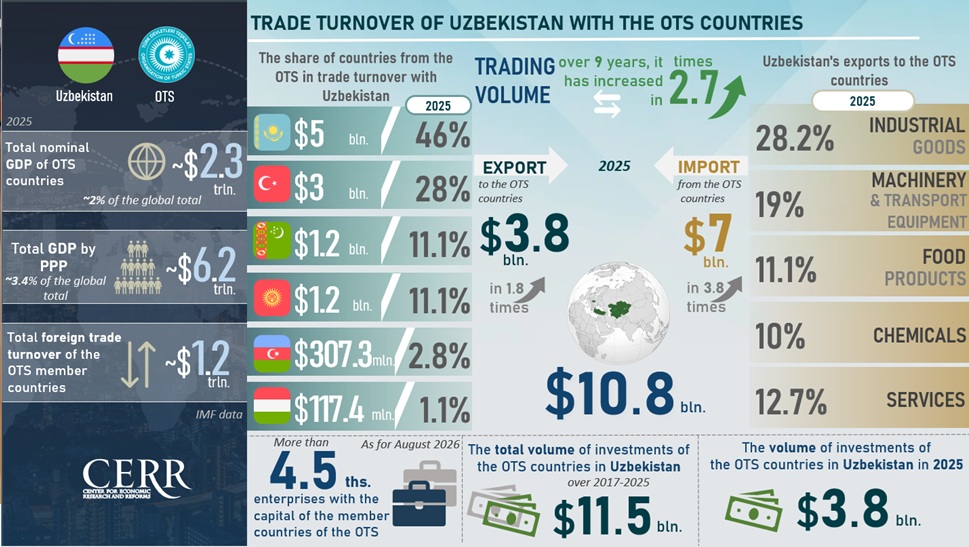
Uzbekistan has moved its economic cooperation with the Turkic states into a practical dimension
Ahead of the 13th Summit of the Organization of Turkic States, scheduled to be held in Ankara, economic cooperation within the OTS is acquiring new substance.
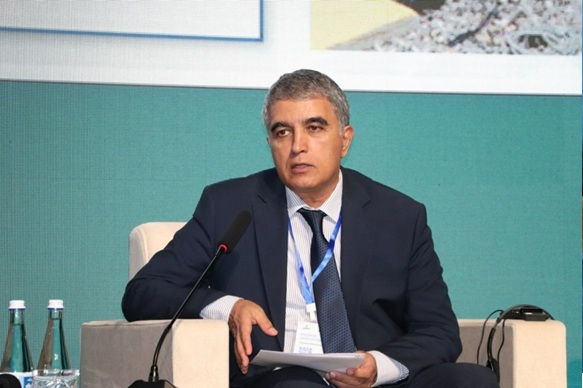
Water security in the turkic world: shared interests and common solutions
Water is a precious blessing that transcends national borders and has long connected peoples and civilizations.

Strengthening Transport Connectivity in Asia through the Development of the Trans-Caspian International Transport Corridor
Shifting international supply chains and expanding trade in Asia are driving demand for sustainable transport routes. For businesses, predictable delivery times, competitive rates, and reliable access to foreign markets are becoming increasingly important.