
Economics of cooperation: trade and investment bring Tashkent and Ashgabat closer together
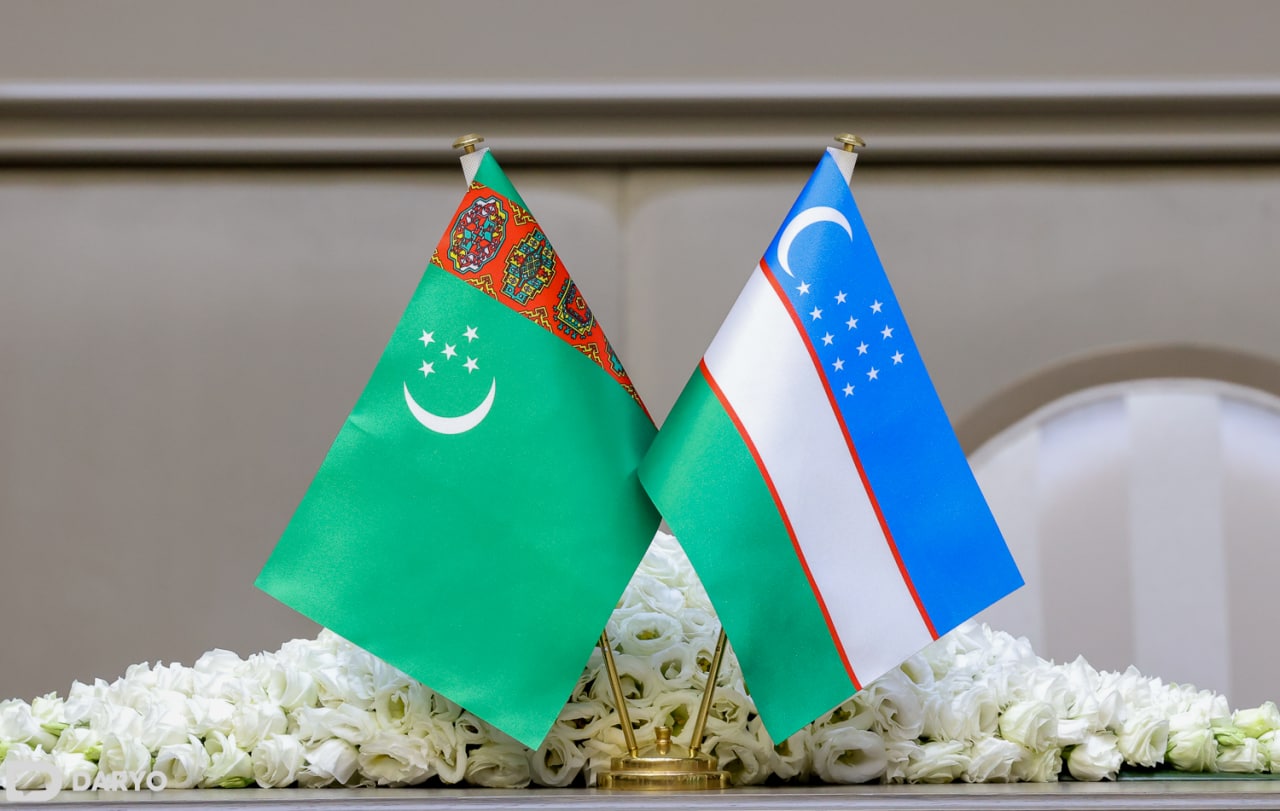
Uzbekistan and Turkmenistan have been building a new format of economic interaction in recent years, in which the key role belongs not to political declarations, but to the real development of trade, industrial cooperation and investment ties.
Countries are gradually moving from a model of episodic projects to systemic partnerships based on a predictable regulatory framework, regular intergovernmental dialogue and the expansion of joint economic initiatives. The highest level of contacts sets the strategic direction, but further development of relations today occurs primarily through specific economic decisions and infrastructure projects.
Another important symbol of the transition to more mature and institutionalized cooperation was the holding in July 2025 of the next meeting of the Joint Uzbek-Turkmen Intergovernmental Commission on Trade, Economic, Scientific, Technical and Cultural Cooperation. The commission, headed by the deputy prime ministers of the two countries, confirmed the commitment of Tashkent and Ashgabat to expand practical interaction and agree on mechanisms for further deepening cooperation in key areas for both economies.
The established legal framework has become a significant basis for the sustainable growth of interaction. Intergovernmental agreements “On the main directions of long-term trade and economic cooperation”, “On the promotion and mutual protection of investments”, “On the avoidance of double taxation of income and property”, “On mutual supplies of goods” and other documents created a regulatory framework that ensures transparency of conditions, predictability of economic policy and guarantees for entrepreneurs of both countries. This base became the foundation on which today's growing trade volumes, investment projects and joint industrial initiatives are built.
The growth of mutual trade shows how effectively this foundation works. Trade turnover between the countries increased from $209 million in 2016 to $1.148 billion in 2024, that is, it increased more than five times. Uzbekistan's exports amount to $128 million, and imports exceed $1 billion - mainly due to fuel, lubricants, chemicals and industrial goods. At the same time, exports in January-October 2025 increased by 23.7%, which reflects the growing interest of the Turkmen market in Uzbek products and the expansion of the list of competitive goods. The structure of trade is gradually becoming more complex: the volume of services, mechanical engineering and finished industrial products is growing.
The creation of the Uzbek-Turkmen border trade zone “Shavat-Dashoguz” was a real breakthrough. The signing of the Agreement on its functioning and the launch of work with the participation of the heads of the two states gave economic cooperation a qualitatively new impetus. This zone is being transformed into a platform where trade, logistics and production can be combined in a single space. It allows businesses to reduce transaction costs, speed up deliveries and enter new markets, making the border region a point of concentration for business activity. In addition to this, the opening of trading houses in Tashkent and Ashgabat creates new tools for promoting goods and direct business interaction.
Investment cooperation is developing progressively. There are 200 enterprises with Turkmen capital operating in Uzbekistan - from the production of facing materials and textiles to furniture factories and service enterprises. The implementation of projects in the agricultural industry, petroleum products refining and production of packaging materials continues. These initiatives are gradually forming the basis for full-fledged production cooperation, where countries not only exchange goods, but also jointly create value-added products.
Transport connectivity plays a significant role in strengthening economic relations. Intergovernmental agreements in the field of rail, road and river transport, as well as new memorandums of cooperation are increasing the efficiency of transport corridors. In 2024, total transport volume reached 1.11 million tons, with transit increasing by almost 40%. Projects for the repair of Turkmen cars at the Andijan Mechanical Plant and the export of tank cars to Turkmenistan confirm that industrial and transport cooperation is becoming an independent area of mutual interest.
Conclusion and prospects
Economic cooperation between Tashkent and Ashgabat is entering a stage maturity. A strong legal framework, dynamic trade growth, industrial integration, investment projects and the launch of a cross-border trade zone create the foundation for large-scale cooperation in the future.
Promising areas include deepening industrial cooperation in the chemical, textile and food industries; transformation of the Shavat-Dashoguz zone into an industrial and logistics cluster; expansion of projects in the field of agriculture and water conservation; development of joint transport infrastructure; creating new investment mechanisms and stimulating the participation of the private sector in regional projects.
The economics of cooperation between Uzbekistan and Turkmenistan today forms a sustainable partnership model that strengthens the economic security of the two states and increases their role in regional trade and transit chains.
Related news
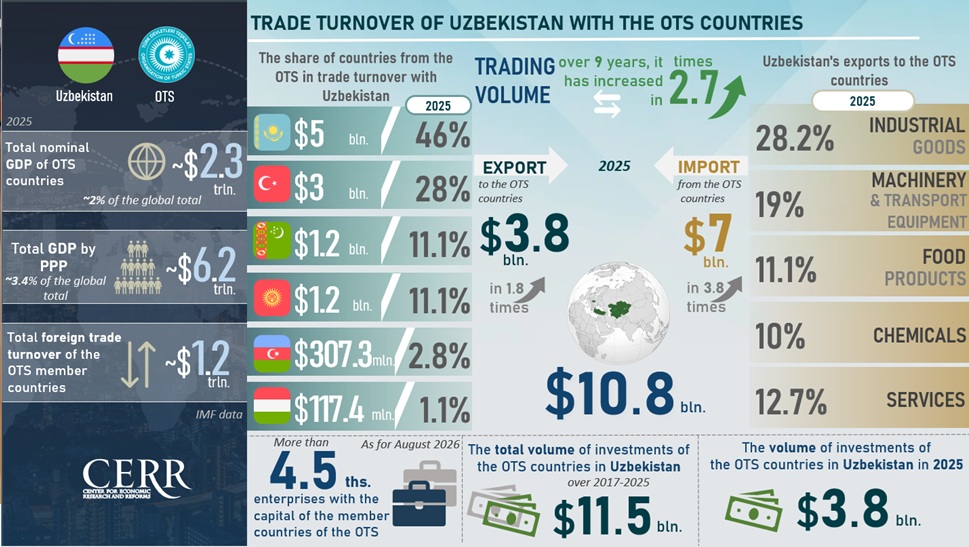
Uzbekistan has moved its economic cooperation with the Turkic states into a practical dimension
Ahead of the 13th Summit of the Organization of Turkic States, scheduled to be held in Ankara, economic cooperation within the OTS is acquiring new substance.
Water security in the turkic world: shared interests and common solutions
Water is a precious blessing that transcends national borders and has long connected peoples and civilizations.

Strengthening Transport Connectivity in Asia through the Development of the Trans-Caspian International Transport Corridor
Shifting international supply chains and expanding trade in Asia are driving demand for sustainable transport routes. For businesses, predictable delivery times, competitive rates, and reliable access to foreign markets are becoming increasingly important.