
The dynamics of Uzbek-Turkish relations reflect pragmatism, mutual trust and a focus on concrete results
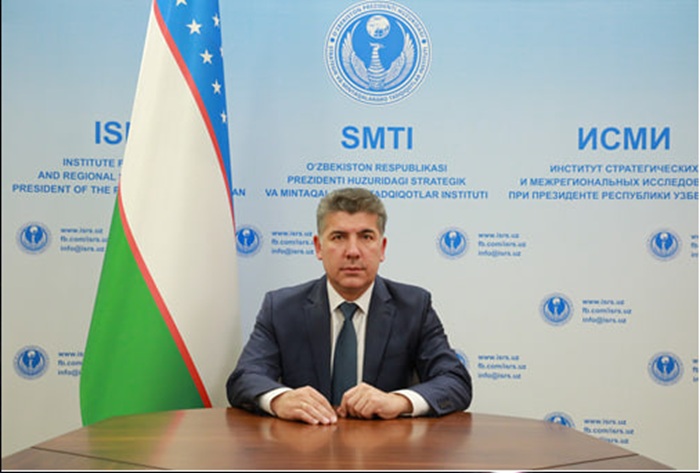
According to him, the official visit of the leader of Uzbekistan to the Republic of Turkey, which endedJanuary 29, 2026should be considered not only as the next event of the bilateral political calendar, but first of all asan important milestone in the institutional strengthening of the Uzbek-Turkish relationships. Its results convincingly confirmed that the interaction between Tashkent and Ankara, which a few years ago was predominantly fragmentary in nature, has reached a qualitatively new level - the level of a comprehensive strategic partnership based on pragmatism and mutual benefit.
The personal role of President Shavkat Mirziyoyev in the formation of this new quality of relations should be especially emphasized. His proactive policy and strategic approach made it possible to bring bilateral interaction to the system level, where pragmatism is combined with a long-term orientation towards sustainable development. It was thanks to the initiative of the President that visits and cooperation programs acquired a regular, institutionalized character, and the agreements reached began to be implemented with clear planning and measurable results, strengthening trust between countries and creating a reliable platform for economic, humanitarian and technological ties.
So, the current program of the visit, which included negotiations in narrow and expanded formats, as well as the fourth meeting of the High-Level Strategic Cooperation Council, demonstrated a high level of political trust and the maturity of the bilateral dialogue. If previously such meetings were held sporadically, today the Strategic Cooperation Council functions on a regular basis, ensuring continuity of decisions and control over their implementation. It is symbolic that key events took place on the eve of the holy month of Ramadan and on the eve of the 30th anniversary of the Treaty of Eternal Friendship and Cooperation, which emphasizes the value and historical basis of the partnership.
It is of fundamental importance that Uzbek-Turkish interaction today is characterized by constructiveness and pragmatism mutual approachesis being built as anopen partnership model focused on ensuring common security and sustainable development. This is reflected in the final setup of the4+4format, which combines coordination between foreign policy, defense and law enforcement departments. Unlike previous consultation mechanisms, this format is applied in nature and allows you to respond on a systematic basis to cyber threats, cross-border crime and other non-traditional challenges.
The economic dimension of the partnership demonstrates sustainable positive dynamics and a high degree of complementarity. In recent years, the volume of mutual trade has more than doubledand reached $3 billion by the end of 2025, whereas at the beginning of the decade this figure did not exceed$1.5 billion. The goal set by the heads of state to bring trade turnover to $5 billion is supported not by declarations, but by a real investment portfolio worth about $9 billion. The number of enterprises with the participation of Turkish capital has also increased significantly: if previously there were hundreds of them, today there are over 2,100 such companies operating in Uzbekistan, which indicates an increase in business confidence and the formation of a solid material basis for strategic partnerships. The need to further promote projects in the field of industry, agriculture, social protection and other priority areas was emphasized, including by expanding the list of goods under the Preferential Trade Agreement.
In preparation for the visit, new priority areas of industrial cooperation were identified, which will be implemented on the basis of a separate program. Compared to previous stages of cooperation, which focused primarily on trade and construction,the current emphasis is on joint production, localization and export-oriented industries. Particular attention was paid to the development of interaction in the field of tourism, holding theater festivals and cultural weeks, joint production of historical films and restoration of cultural heritage sites, which reflects the expansion of the humanitarian component of the partnership.
It should be especially noted thatthe agreements reached are directly focused on solving the structural problems of the national development of Uzbekistan. The development of the Middle Corridor and cooperation in the field of transport and transit enshrined in the corresponding protocol are aimed at overcoming the country’s geographical isolation and diversifying external logistics routes. Compared to traditional routes, these solutions can reduce delivery times and increase the sustainability of supply chains. Agreements on industrial cooperation, management of special economic zones and the creation of joint clusters contribute to reducing the raw material orientation of the economy and the formation of industries with high added value. The transfer of technological competencies, including issues of nuclear safety and digitalization, should be considered as an element of sovereign modernization, rather than technological dependence.
A fundamentally new stage was the scaling of cooperation to the regional level. The intention to organize visits of delegations from all regions of Uzbekistan to Turkey reflectsthe transition from a centralized model of interaction to a more flexible, decentralized partnership architecture. If previously interregional contacts were limited, then in accordance with the Practical Action Plan for 2026–2027, it is envisaged toform sustainable partnerships between the regions of the two countries, launch joint projects and form a portfolio of local initiatives. The significant potential for introducing advanced Turkish experience in the field of agriculture, horticulture, healthcare and medical tourism was also noted.
The military-technical cooperation block deserves special attention. Compared to previous years, when interaction was limited to consultations, the signed agreements provide fordeeper cooperation in the field of military medicine, personnel training, implementation of surveillance systems and unmanned technologies. This interaction is exclusivelydefensive in nature and is aimed at increasing the professional level and technical equipment of the Armed Forces of Uzbekistan, which is a rational contribution to strengthening national defense capability.
The humanitarian dimension of the Uzbek-Turkish partnership gives relations additional depth and stability. The implementation of the Cultural Cooperation Plan for 2026–2027, the agreement to hold the fourth Rectors’ Forum in Bukhara, as well as joint projects in the field of education form a long-term basis for interaction. The participation of Uzbekistan in the restoration of the earthquake-damaged Hatay province, the construction of the Uzbekistan residential complex and a comprehensive school became a clear example of practical solidarity. Thestart of construction of an Uzbek school in the Bekirkoy district of Istanbul - the first educational institution of Uzbekistan abroadis also symbolic, which reflectsthe strategic attention to the humanitarian aspect of cooperation and work with the diaspora.
In general, the visit to Turkey confirmed that Uzbek-Turkish relations are developing as a pragmatic, dynamic and responsible partnership. Compared to previous stages of bilateral interaction, the current format is characterized by greater institutional stability, expansion of economic and regional cooperation, as well as deepening humanitarian ties. The agreements reached create additional tools for overcoming transport and technological restrictions, modernizing the economy, strengthening defense capability and ensuring general security, forminga solid basis for the further expansion of international cooperation of Uzbekistan in a changing global environment.
IA "Dunyo",
Tashkent
Related news
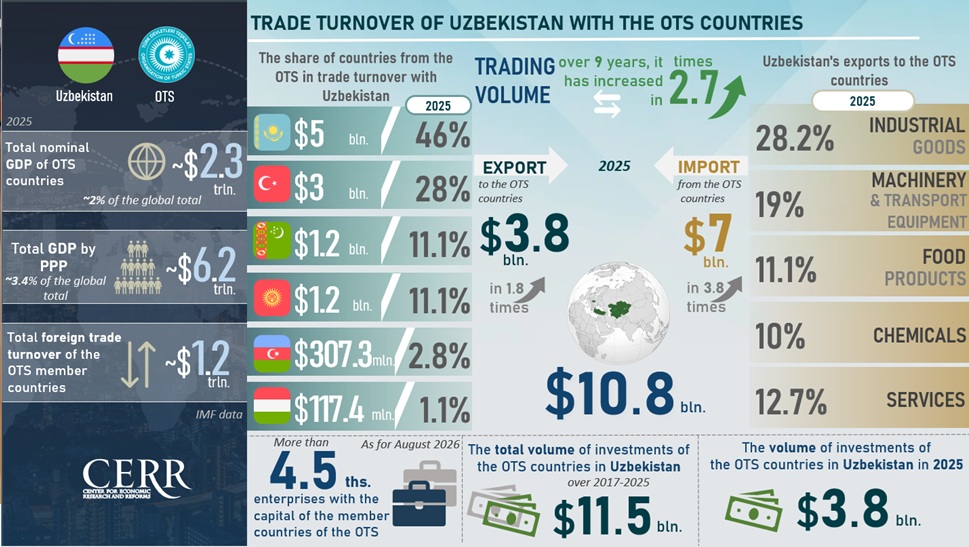
Uzbekistan has moved its economic cooperation with the Turkic states into a practical dimension
Ahead of the 13th Summit of the Organization of Turkic States, scheduled to be held in Ankara, economic cooperation within the OTS is acquiring new substance.
Water security in the turkic world: shared interests and common solutions
Water is a precious blessing that transcends national borders and has long connected peoples and civilizations.

Strengthening Transport Connectivity in Asia through the Development of the Trans-Caspian International Transport Corridor
Shifting international supply chains and expanding trade in Asia are driving demand for sustainable transport routes. For businesses, predictable delivery times, competitive rates, and reliable access to foreign markets are becoming increasingly important.