
Central Asia and China at the current stage of development: a partnership aimed at a common future
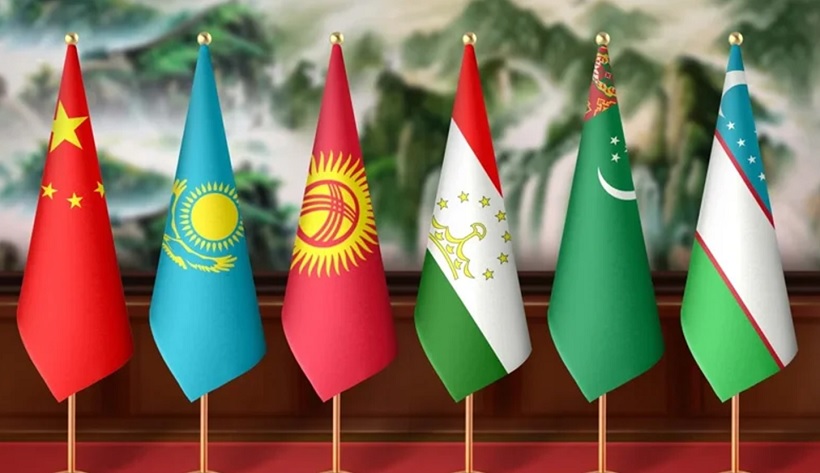
At the present stage, the development of constructive relations with China is one of the key priorities of the foreign policy of the Central Asian states. In recent years, the countries have managed to achieve a high degree of political trust and sustainable economic interaction. At the same time, a special place in this partnership is occupied by the strategic cooperation between Tashkent and Beijing, which has become a symbol of exemplary relations based on pragmatism, mutual respect and the desire for joint development.
For Uzbekistan, China has always been and remains a friendly neighbor, a reliable and time-tested partner. Today we can confidently say that the current stage of Uzbek-Chinese relations is the most productive and eventful in the entire history of bilateral relations.
Such progress became possible thanks toregular and constructive political dialogueas well as strong, trusting relations between the leaders of the two countries - President of the Republic of Uzbekistan Shavkat Mirziyoyev and Chairman of the People's Republic of China Xi Jinping.
It is significant that in 2023 alone, the heads of state heldfourmeetings, each of which not only strengthened the agreements reached, but also opened up new horizons of interaction.
The visit of the President of Uzbekistan to China in January 2024, which emphasized the special the importance of the Chinese vector for the foreign policy of the republic.
The result of the negotiations was raising relations to the level of all-weather strategic partnership. Uzbekistan is among the states with which Beijing is building the most trusting, stable and long-term ties. This is the result not only of intensive dialogue at the highest level, but also of real steps to deepen economic, technological and humanitarian cooperation.
One of the most striking examples is the dynamics oftrade and economic cooperation. Today China is Uzbekistan’s largest foreign economic partner. In 2024, trade turnover amounted to $12.4 billion, and by 2030 it is planned to increase it to $20 billion.
At the same time, the volume of Chinese investments in the economy of Uzbekistan over the past seven years has exceeded $23 billion, covering such key sectors as the chemical industry, mechanical engineering, pharmaceuticals, energy and infrastructure.
It is important to note that trade and investment cooperation does not stand still, it is actively diversifying, deepening and covering new sectors. In particular, industrial cooperation is becoming a popular area. Chinese manufacturers, including EXEED and BYD, are actively entering the country's market. The joint project to launch the production of electric vehicles in the Jizzakh region became BYD's first production facility outside of China and a symbol of the transition to a high-tech industrial partnership.
Environmental and technological aspects are of particular importance in this process. Uzbekistan, striving for sustainable development, is implementing the National Green Growth Strategy until 2030 and is actively attracting Chinese technologies to the renewable energy sector. In 2023 alone, agreements were signed on the construction of 11 solar and wind power plants worth $4.4 billion.
In addition, in recent years, interaction between Uzbekistan and China in the development of e-commerce has reached a new stage of development. Thus, in September 2022, a permanent national pavilion of Uzbekistan was launched on the Alibaba platform, where more than 100 products from the textile, agricultural and food industries are displayed. In the future, it is planned to open new industry sections and increase product names to 300.
At the same time, it is fair to note that sustainable development is impossible without a humanitarian component. As has been repeatedly emphasized at the level of heads of state, culture and education form the spiritual basis for bringing peoples closer together. In recent years, there has been an increasing interest of the parties in mutual language learning.
Confucius Institutes have been operating in Tashkent since 2005 and Samarkand since 2014, which make an important contribution to the popularization and study of Chinese language and culture. More than a thousand students study there annually.
In turn, since 2010, the Uzbek language department began functioning at the Central University of Nationalities of the People's Republic of China, and in 2018, a bachelor's program in the specialty "Uzbek language" was opened at the Shanghai University of International Studies and the Center for Uzbek Language and Culture was created.
A convincing example of successful cooperation in this area is the "Lu Ban workshops" created by China together with the countries of Central Asia - educational centers named after the legendary Chinese inventor and artisan. These projects train specialists with practical high-tech skills that are in demand in modern sectors of the economy.
Interaction between countries in the field of tourism has also received a significant impetus. Uzbekistan, like China, is a colorful country with a rich historical and cultural heritage and unique ancient architectural monuments, which have always attracted the attention of foreign tourists from different parts of the world.
In this regard, the abolition of visas between China and Uzbekistan from 2024 and the signing of the Tourism Cooperation Plan for 2024-2026 open new horizons for business communication, student exchanges, humanitarian projects and tourism.
All this makes bilateral ties closer to people and activates the so-called "people's diplomacy."
In addition, ties between academic and analytical structures of Uzbekistan and China are dynamically developing and expanding. A regular and open dialogue has been established between the think tanks of our countries within the framework of various joint conferences, round tables, and expert meetings.
Against this background, the experience of the Uzbek-Chinese partnership logically fits into a broader context - China's cooperation with the whole of Central Asia, which in recent years has demonstrated steady dynamics of sustainable growth.
Together with the Chinese side, a large number of projects have been implemented in the energy, mining and manufacturing industries, various industrial parks and free economic zones have been created.
Beijing has firmly established itself as a key partner of the countries of the region in the development of transport and logistics infrastructure. With the assistance of the People's Republic of China, the multimodal road "China-Kyrgyzstan-Uzbekistan" and the international center for cross-border cooperation "Khorgos" were implemented. Highways and railways were built and reconstructed, bridges and tunnels were erected.
At the same time, China has become one of the key destinations for the products of the countries in the region. The countries of Central Asia are consistently increasing the range of competitive goods, agricultural and food products supplied to the huge Chinese consumer market. At the same time, the structure of trade continues to expand. Trade in the format of cross-border e-commerce is rapidly developing.
As a result, there is rapid growth and volume of regional trade with China. For the period 2017-2024 Trade turnover between the countries of Central Asia and China increased by 2.5 times and amounted to $60.7 billion, exports increased by 1.9 times to $27.1 billion, imports by 3.4 times to $33.6 billion. At the same time, China is the leading trading partner for all countries of Central Asia. The share of trade with China in the total trade turnover of the region's countries averaged 24% in 2024.
In parallel, there has been a steady increase in Chinese investment, which is directed to key sectors of the economy, contributing to the modernization and sustainable development of the region. The total volume of direct investments and loans from China to the countries of Central Asia as of 2024 exceeded $24 billion. Among the recipients of Chinese investments, the largest volumes were in Kazakhstan - $15.5 billion and Uzbekistan - $7.2 billion.
By the end of 2024, more than 9 thousand enterprises with the participation of Chinese capital operate in the countries of the region, which indicates a high level of presence of Chinese business in economies of the countries of the region.
In other words, mutually beneficial cooperation with China makes an invaluable contribution to the progressive development of Central Asia, contributing to economic growth, increased interconnectedness and, in general, increased stability and sustainable development of the region. In turn, the guarantor of such dynamic development of “mature” relations is strict adherence to the basic principles - mutual trust, mutual support, equality, solidarity, respect and consideration of each other’s interests, choosing one’s own path of development.
The second summit of the leaders of the countries of Central Asia and the PRC, which took place in June of this year, was confirmation of this. The event demonstrated a high degree of political trust, as well as a willingness to further strengthen mutually beneficial cooperation between China and the countries of the Central Asian region. The Astana Declaration adopted as a result, as well as the signed documents and planned projects, determined the future contours of the development of multilateral interaction.
The most important result of the meeting was the signing of the Treaty on Eternal Good Neighborliness, Friendship and Cooperation,which became not only a symbol of mutual trust, but also the entry of dialogue to a fundamentally new level. Its role is to create a solid legal and political basis for long-term cooperation that contributes to the sustainable development of the region and the solution of common challenges.
It is especially worth noting the fact that thanks to the creation in Xi'an in 2023 of the permanent Secretariat "Central Asia - China" the format received a stable institutional basis, which distinguishes it from many other regional platforms.
Without a doubt, such positive results of multilateral interaction were largely a reflection of the fundamental changes and new reality that have emerged in the region in recent years. As the President of Uzbekistan Shavkat Miromonovich rightly noted, “today this is a different Central Asia - it is united and strong, open to dialogue and full-scale partnership.”
The numbers confirm this. Since 2000, the total GDP of the region's countries has grown more than tenfold, from $46 billion to almost $520 billion. In recent years, economic growth rates have been over 6%, twice the world average. The total volume of accumulated Chinese investments in the region over the past 17 years has amounted to almost $70 billion, and this figure demonstrates annual steady growth of around 5.5%.
The high level of consolidation of countries was confirmed by theSixth Consultative Meeting of the Heads of State of Central Asia. The decisions taken indicate a readiness to move towards the formation of a capacious regional market capable of actively integrating into the world economy.
A logical continuation of the region's consistent course was the expansion of partnership with China, which has firmly established itself as a responsible and reliable ally of Central Asia.
All this allows us to assert that the new architecture of interaction between Central Asia and China has already become a reality - pragmatic, institutionalized and looking to the future.
Based on the priorities of regional development voiced by the leaders of the countries of the region and the PRC, today promising areas of cooperation are clearly emerging, designed to give additional impetus to multilateral interaction.
Firstlytoday, the promotion of joint industrial cooperation projects is of particular relevance.
The states of Central Asia, possessing rich human capital, production and resource and raw materials potential, together with China can concentrate on deep processing of raw materials and industrial cooperation with subsequent entry into the production of products with high added value and their sale in the markets of third countries.
To create a system of interconnected industrial clusters, technology parks and logistics hubs with the attraction of Chinese investments, technological and scientific solutions within At the Astana summit held in June of this year, the President of Uzbekistan Shavkat Mirziyoyev proposed to develop a long-term strategy for theIndustrial and Infrastructure Belt “Central Asia - China.”
The issue of introducing effective financial instruments capable of supporting large projects of regional importance is becoming increasingly important. According to experts, the deficit of capital investments in the infrastructure development of Central Asia amounts to hundreds of billions of dollars.
In this regard, as the head of our state noted, it seems appropriate to establish the Central Asia - China Development Fund, which could become an effective platform for promoting infrastructure initiatives.
Secondly,the issues of food security and stable food supply are at the forefront in the face of current crises in the world associated with growing geopolitical tensions. Ongoing conflicts lead to disruptions in the supply chain of agricultural products, as well as rising prices.
At the same time, in Central Asia, problems associated with global climate change, scarcity of water resources, desertification and soil degradation and, as a result, a decline in crop yields are worsening. Taking into account the rich Chinese experience, it seems promising to establish cooperation in the field of ecological protection and environmental protection through the exchange of experience, technologies and highly qualified personnel.
In this regard, it is important to accelerate the adoption and implementation of the Green Development Program until 2030 initiated by President Shavkat Mirziyoyev with the further establishment ofEnvironmental alliancefor dialogue and partnership in the field of combating desertification, restoring degraded lands, increasing bio-ecological sustainability in arid and desert areas.
Thirdly, close cooperation in all these areas requires established transport and logistics communications, openness of economies to world markets, and their connections with centers of economic activity. In the interests of developing a common vision for the prospects for cooperation between the countries of Central Asia and China in this strategic area, Uzbekistan advocates the formation of asingle map of transport corridors and modern transit infrastructure.
Fourth,based on the principle of respect for the diversity of cultures, our cooperation opens up new opportunities for intercultural exchange for millions of people. The heads of our countries have repeatedly emphasized that our invaluable asset is the common desire for the mutual enrichment of cultures and the rapprochement of our peoples.
The initiative of the President of Uzbekistan tocreate a single digital portal “Cultural Heritage of the Silk Road” is aimed at these goals. It is designed to combine the historical and cultural resources of the countries of Central Asia and China with access to it for researchers, students, tourists and representatives of the creative industry.
In general, building mutually beneficial cooperation between the countries of Central Asia and China not only meets the challenges of our time - it shapes the contours of the future, in which regional stability, sustainable development and good neighborliness become the main guidelines.
We can say with confidence that the existing spirit of cooperation between our countries, based on the principles of equality, openness, pragmatism and mutual support, will be the key to the successful development of relations for many years to come.
Shakhlo Khamrahodjaeva,
Leading Researcher, ISMR
Under the President of the Republic of Uzbekistan
Related news
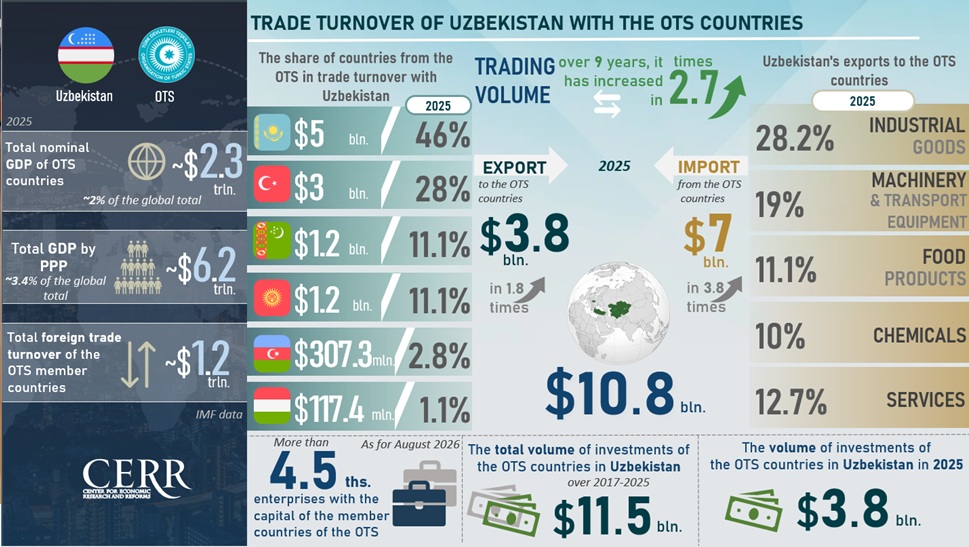
Uzbekistan has moved its economic cooperation with the Turkic states into a practical dimension
Ahead of the 13th Summit of the Organization of Turkic States, scheduled to be held in Ankara, economic cooperation within the OTS is acquiring new substance.
Water security in the turkic world: shared interests and common solutions
Water is a precious blessing that transcends national borders and has long connected peoples and civilizations.

Strengthening Transport Connectivity in Asia through the Development of the Trans-Caspian International Transport Corridor
Shifting international supply chains and expanding trade in Asia are driving demand for sustainable transport routes. For businesses, predictable delivery times, competitive rates, and reliable access to foreign markets are becoming increasingly important.