
Uzbekistan and Jordan: Two Talent Economies, One Digital Agenda
Uzbekistan and Jordan have built their digital economies on the same strengths: young talent, IT services exports and close ties to the Gulf. Digital technology is therefore the most promising field for the next stage of their partnership.

In our view, digital technology is the most open field between the Republic of Uzbekistan and the Hashemite Kingdom of Jordan, yet it has still to become a track of its own in our relationship. We believe this is the right moment to bring our two agendas together. The political ground is well prepared, and both our governments have set 2028 as the horizon for the next stage of e-government.
For Uzbekistan, digital transformation is a declared national priority, and Jordan is among our most natural partners in it. Under its Digital Transformation Strategy 2026–2028, Jordan is pursuing goals very close to ours from the heart of the Levant: smarter public services, stronger digital infrastructure and a technology sector that exports skills and services.
Firm foundations and a shared vision
The state visit of His Majesty King Abdullah II ibn Al Hussein to Samarkand on 25–26 August 2025 was the first since our countries established diplomatic relations in February 1993. His Majesty’s talks with President Shavkat Mirziyoyev gave our partnership new momentum.
Our digital economies rest on the same strengths: talented young people, IT services exported to the world and strong links with the Gulf.
The two economies are also complementary. Jordan brings Arabic-language digital skills and a deep pipeline of graduates in information and communication technology (ICT). Uzbekistan brings scale, competitive costs and new artificial intelligence (AI) and data-centre capacity.
Our national agendas also run in parallel. In Uzbekistan, the digital drive is anchored in a dedicated Ministry of Digital Technologies and a national AI strategy adopted in 2024. A presidential resolution of July 2026 provides for digitising at least 5,000 administrative functions of state bodies by the end of 2028. In Jordan, the Ministry of Digital Economy and Entrepreneurship (MoDEE) is implementing 57 projects under the 2026–2028 strategy.
Where our agendas meet
We see four areas where our cooperation can begin.
E-government and infrastructure
E-government is the natural starting point. Both our countries are building one-stop portals, digital identity and proactive services: Jordan through Sanad, and Uzbekistan through the Single Portal of Interactive Public Services and the OneID digital identification system. A memorandum between our two digital ministries on e-government, infrastructure, AI and skills would give this cooperation an institutional home.
We have experience to share. As of 1 October 2026, the Single Portal offered 934 services, up from 60 in 2017, to 17.2 million registered users, and OneID counted 16.7 million users. In 2024, Uzbekistan ranked 63rd of 193 countries in the United Nations E-Government Development Index, within its “Very High” group.
The networks behind these services keep growing. By October 2026, fibre-optic lines had reached 398,000 kilometres, up from 119,500 in 2020, and mobile networks covered 99.5% of settlements.
IT services and outsourcing
IT Park Uzbekistan is the engine of our technology sector. In 2026, the number of its residents passed 4,200, or 28 times the 147 of 2017. They include more than 1,200 companies with foreign capital and more than 1,200 exporters. Residents employ about 58,000 people and generated $2.8 billion in revenue in 2025, when Uzbekistan’s ICT services exports reached $1 billion. During the first nine months of this year, the country's IT services exports exceeded USD 930 million.
Their markets have grown from eight countries in 2017 to 105. In January–September 2026, North America took 55% of residents’ exports, and the European Union and the United Kingdom 16%. The Middle East and North Africa took 8% in 2025–2026, a foothold that Jordan could help us widen. Already 400 exporting residents work outside Tashkent, so a team can grow beyond the capital.
IT Park could become a Central Asian base for Jordanian IT and outsourcing firms, and Jordan a gateway to the Arab world for Uzbek companies. Linking IT Park with Jordan Source, MoDEE’s programme to promote the sector, would let companies from both countries bid jointly for Gulf and regional contracts. Such bids would pair Arabic-language capacity with engineering scale. Jordan’s own terms are competitive too: IT companies there pay 5% corporate income tax on local profits.
Artificial intelligence
Arabic–Uzbek datasets and AI tools are a natural joint project. Uzbekistan, which rose from 87th in 2023 to 62nd in 2025 in the Government AI Readiness Index by Oxford Insights, can offer computing capacity, and Jordan its Arabic-language expertise.
Our flagship AI projects already involve partners from the Arab world. The Five Million AI Leaders programme is a partnership with the United Arab Emirates, and a 12-megawatt AI-ready green data centre is now being built with Saudi Arabia’s DataVolt.
Startups and talent
Our startup ecosystem is gaining speed. In StartupBlink’s Global Startup Ecosystem Index 2026, Uzbekistan climbed 19 places to 79th, posted the index’s highest growth that year, at more than 225%, and received Country of the Year status.
The Startup Base platform lists more than 1,600 startups with total investment above $400 million. Through it, founders can find investors, apply to accelerators and claim partial compensation for international programmes. On a separate crowdsourcing platform, state and public organisations publish digitalisation tasks, so a startup can test its solution with a real customer.
Jordanian founders would be natural candidates for Land of Startups, which from 2027 will offer a $5 million fund for 25 winners who set up in Uzbekistan. A Jordanian pavilion at ICT Week Uzbekistan 2027 would present Jordanian technology firms in Tashkent.
Talent is the common thread. By Jordanian figures, the Kingdom produces more than 45,000 graduates a year, 22% of them in ICT, and 51% of those ICT graduates are women. Uzbekistan, host of the 2026 International Olympiad in Informatics, is positioning itself as a regional hub for digital cooperation in Central Asia.
What is already in place
Jordanian partners would not be starting from zero. Since the state visit, our countries have set up a joint Business Council, held the first session of the Intergovernmental Commission and launched regular flights between Amman and Tashkent. Companies with Jordanian capital are already among IT Park’s residents, and IT Park’s office in Riyadh brings our firms closer to Arab markets.
For a Jordanian company, entry into Uzbekistan is designed to be quick and staged. The One Stop Shop service helps with company and tax registration and with opening a bank account. Applications can be made remotely, and IT Park specialists guide the company through the main administrative steps.
The Incentives programme, updated in 2026 as the successor to Zero Risk, supports export-oriented companies that create jobs. Participants can receive office premises and equipment with an option to buy, and recover part of their recruitment and training costs. The entry threshold has been lowered from 20 to 10 new jobs. For qualifying positions, the programme compensates 10–15% of payroll, paid after 12 months of confirmed employment.
Eligible IT Park residents are exempt from all types of taxes, mandatory contributions to state targeted funds and social tax. Eligibility depends on the type of activity. Residents contribute to the IT Park Directorate according to their revenue and export activity, and their employees pay 7.5% personal income tax.
A multiple-entry IT Visa of up to three years, renewable in Uzbekistan, lets eligible foreign IT specialists, investors and founders work without a separate permit. Their family members can also obtain visas, and the Softlanding service helps with relocation.
From early 2027, the new Enterprise Uzbekistan centre is expected to add a special jurisdiction based on English common law.
The road ahead
Over the next three to five years, we expect our cooperation to grow fastest where our plans already overlap: e-government, where we share a 2028 horizon; IT services for Gulf clients; Arabic–Uzbek language technologies; and startup and talent exchange.
None of this requires new institutions, only closer links between those that already exist. The first steps are a memorandum between our ministries and a link between IT Park and Jordan Source. The calendar then offers natural milestones. In 2027, Land of Startups begins offering its fund, ICT Week Uzbekistan 2027 can host a Jordanian pavilion, and the common-law jurisdiction of Enterprise Uzbekistan is expected to start work.
As gateways to our own regions, Uzbekistan and Jordan can together open markets that neither could easily reach alone.
Building together
Uzbekistan and Jordan are building their digital economies on the same foundation: talented young people and the services they deliver to the world. Digital technology is where our partnership has the most room to grow, and Jordanian partners will find a market already under construction and a field still open.
We are ready to offer our colleagues at the Ministry of Digital Economy and Entrepreneurship a practical agenda and to build it with them, step by step.
“Our partnership with Jordan can reach into nearly every layer of our digital economies — from one-stop government portals and digital identity, to IT services for clients across the Gulf and the wider region, to Arabic–Uzbek datasets and AI tools, and the startups and young talent of both our countries. The groundwork is already in place: companies with Jordanian capital are among the more than 4,200 residents of IT Park, and the Middle East and North Africa took 8% of their exports in 2025–2026. Digital technology is the most open field in our relationship, and we intend to develop it — through shared e-government expertise, joint work on artificial intelligence, and a wider door for Jordanian companies and founders into our market and the region beyond it.”
Sherzod Shermatov,
Minister of Digital Technologies of the Republic of Uzbekistan.
متعلقہ خبریں
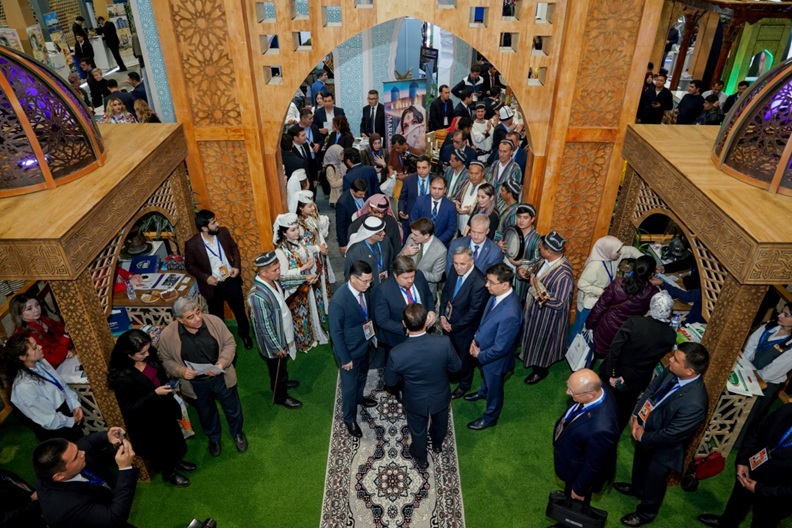
تمام راستے تاشقند کی جانب جاتے ہیں
31ویں تاشقند بین الاقوامی سیاحتی نمائش ’’سلک روڈ پر سیاحت – TITF 2026‘‘ میں 20 ممالک کی 300 سے زائد کمپنیاں شرکت کریں گی۔
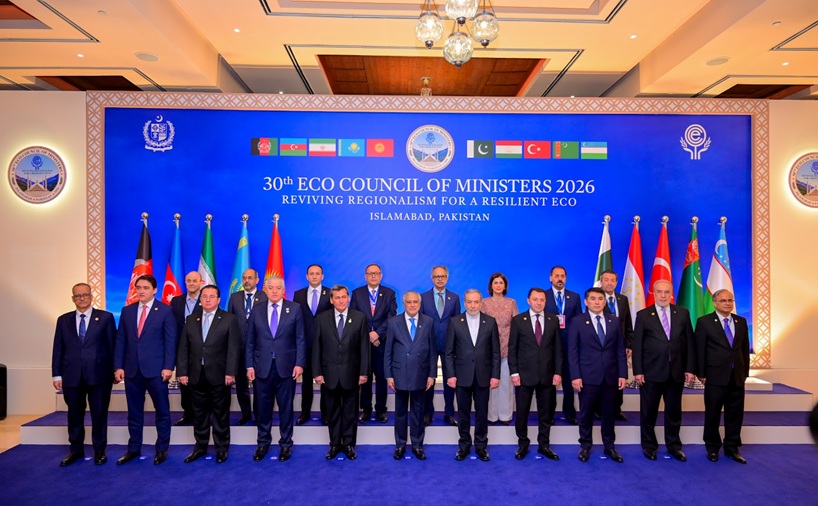
اقتصادی تعاون تنظیم کی وزرائے خارجہ کونسل کا 30واں اجلاس منعقد ہوا
16 نومبر 2026 کو اقتصادی تعاون تنظیم (ECO) کی وزرائے خارجہ کونسل کا 30واں اجلاس اسلام آباد میں منعقد ہوا۔ اجلاس میں ازبکستان کے وفد کی قیادت نائب وزیر خارجہ بوبور عثمانوف نے کی۔
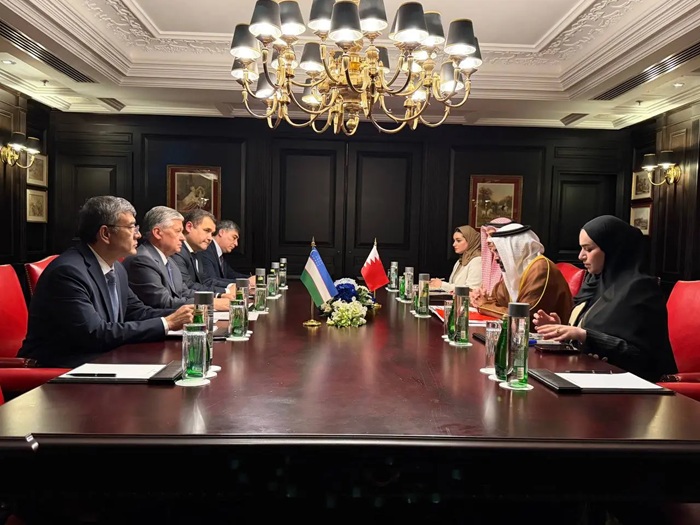
ازبکستان اور بحرین کے درمیان سیاسی مشاورت کا پہلا دور منامہ میں منعقد ہوا
یکم نومبر 2026 کو منامہ میں جمہوریہ ازبکستان اور مملکت بحرین کی وزارتِ خارجہ کے درمیان سیاسی مشاورت کا پہلا دور منعقد ہوا۔